EN
EN
I. Industry Demand: Why is the global industrial sector seeking electric winches with a clutch?
Electric winches serve as indispensable "power arms" for daily operations across construction sites, underground mines, factory workshops, and warehousing/logistics centers. However, various industries are increasingly demanding greater operational flexibility and efficiency from their equipment.
Construction Engineering
Construction sites feature changing environments and require frequent relocation, rapid cable setup, and adjustments. Equipment must be not only durable but also flexible to operate. Standard winches are slow to release the cable and complex to operate, resulting in significant time wasted waiting. We understand that every minute on a construction site impacts the project schedule.
Mining Operations
Underground spaces are confined, operating environments are harsh, and equipment requires frequent repositioning. Equipment must be both reliable and easy to deploy quickly. Standard winches rely on the motor to drive cable release, a process that is both slow and energy-intensive.
Warehousing & Logistics
Spaces are limited, operations are frequent, and precise control is required. Equipment needs to be both flexible and reliable. Standard winches are bulky and complex to operate, leading to high worker training costs.
General Industry & Equipment Maintenance
Equipment installation, workpiece lifting, and material handling require versatile, easy-to-use lifting tools. Standard winches often have limited functionality, making it difficult to adapt to diverse operational needs.
II. Customer Pain Points: What challenges are you facing?
Scenario 1: Cable release is too slow, hindering efficiency
"Every time I need to release the cable, I have to hold the button and wait ages; the motor hums while the cable inches out. By the end of the day, a huge amount of time has been wasted just on releasing the cable."
This is real feedback from construction sites. Standard electric winches require power to drive the motor and slowly rotate the drum to release the cable, wasting both time and electricity.
Scenario 2: Equipment is bulky and inconvenient to operate
"The machine is too heavy to move, and the operation is too complex for workers to master."
This reflects the views of equipment managers. Industrial equipment needs to be user-friendly as well as high-performing—excessive weight hampers deployment efficiency, while complexity compromises operational safety. Scenario 3: Motor Overheating – Unable to Sustain Continuous Operation
"The motor gets too hot to touch after just a short period of use; I’m afraid to keep running it for fear of burning it out."
This is a common issue for many users. Standard winches often suffer from poor heat dissipation; temperatures rise rapidly during continuous operation, significantly compromising efficiency.
III. Product Solution: How the Pressure-Plate Clutch Electric Winch Solves These Problems
Pressure-Plate Clutch Electric Winch—Fast cable release, responsive operation, and long-lasting performance.
Core Specifications
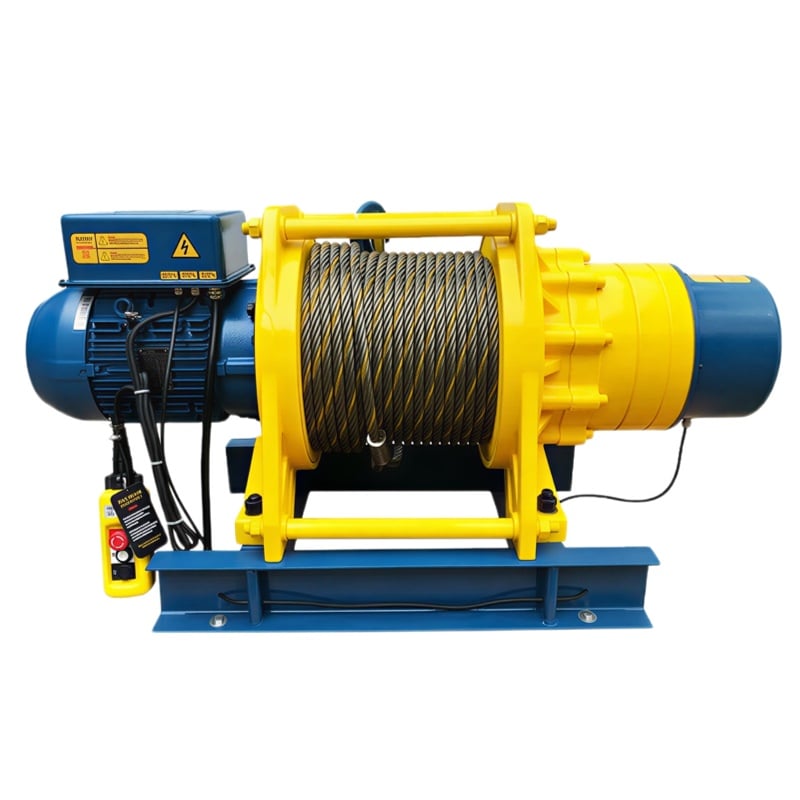
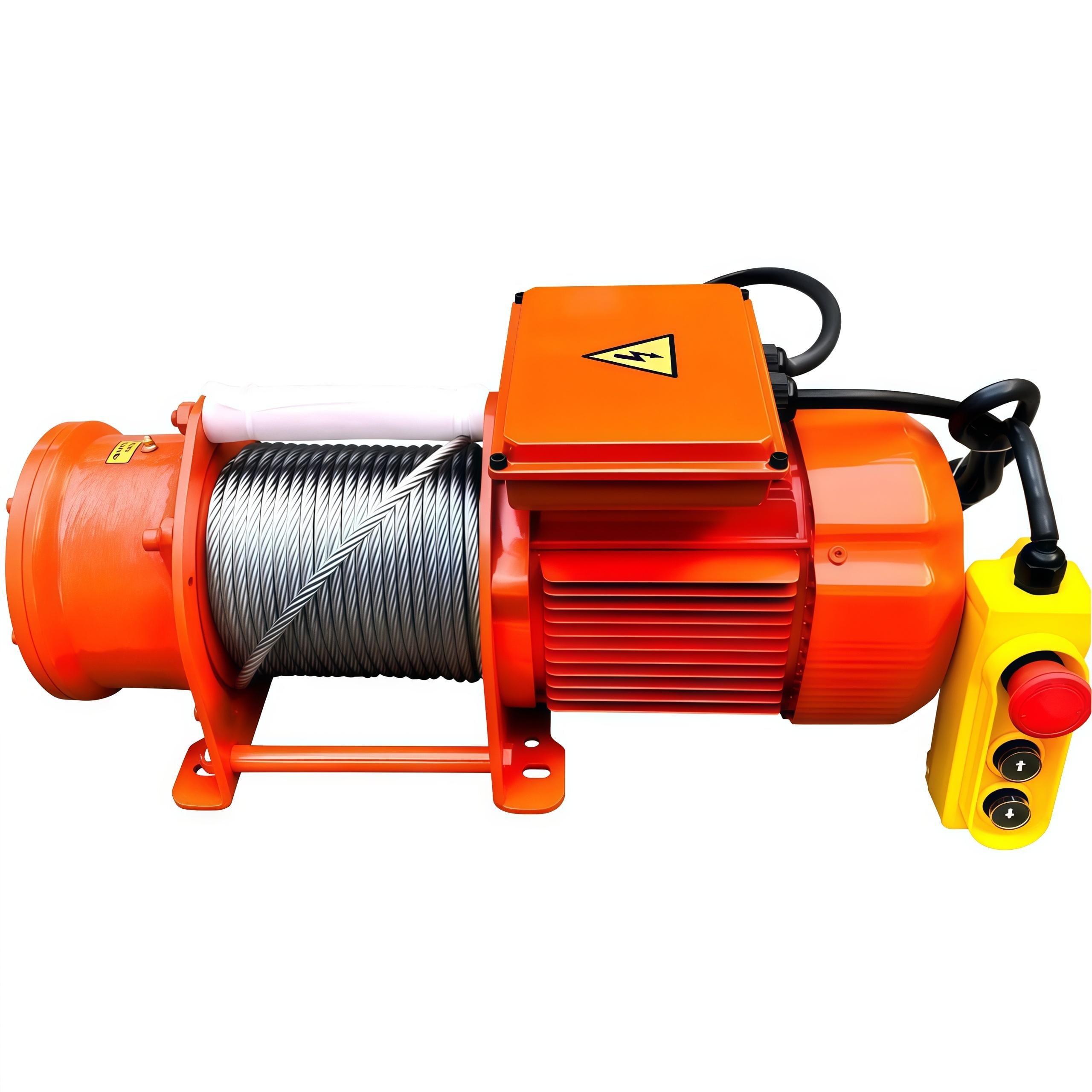
The core configuration of the pressure-plate clutch electric winch includes: a pressure-plate clutch system for free cable release; a pure copper motor for rapid heat conduction and extended service life; a cooling fan to prevent overheating during continuous operation; and an aluminum alloy housing that is lightweight, durable, and offers superior heat dissipation. Designed for safe and convenient operation, the unit is reliable, efficient, and durable, making it suitable for various applications in construction, mining, warehousing, and general industry.
Four Key Advantages
Pressure-Plate Clutch—Free cable release, saving time and power
This is the key advantage distinguishing the pressure-plate clutch electric winch from standard models. A simple flick of the clutch handle disengages the drum from the motor, allowing the wire rope to be released freely—a gentle manual pull lets the rope unwind smoothly.
With standard winches, releasing the cable requires pressing a button, starting the motor, and waiting for the drum to rotate and slowly feed out the rope; if too much is released, it must be wound back in. In contrast, the pressure-plate clutch winch allows for smooth, manual release with just a flick of the clutch—feed out exactly the amount you need, then re-engage the clutch to start working. When it comes to releasing the cable, one method involves "waiting," while the other involves "pulling." Time saved translates directly into increased efficiency.
Pure Copper Motor—Rapid heat conduction, long service life
The motor windings are made of pure copper, offering excellent electrical conductivity and low heat generation. Compared to copper-clad aluminum or aluminum-wound motors, pure copper motors maintain more stable temperatures during continuous operation and offer a longer lifespan. A cool-running motor ensures less strain during work—the foundation for the equipment's long-term, reliable performance.
Cooling Fan—Prevents overheating during continuous operation
The motor is equipped with a cooling fan that generates active airflow for heat dissipation. Even in scenarios requiring frequent start-stop cycles or prolonged continuous operation, the motor temperature remains within a safe range—preventing overheating, avoiding shutdowns, and ensuring work proceeds without interruption.
Aluminum Alloy Housing—Lightweight, Durable, and Superior Heat Dissipation
The all-aluminum alloy housing design significantly reduces the unit's weight while maintaining structural integrity. Aluminum alloy offers better thermal conductivity than steel, facilitating faster heat dissipation for the motor and gearbox. A lighter unit is easier to transport and deploy, while superior heat dissipation translates to a longer service life.
IV. Application Value: What Can the Pressure-Plate Clutch Electric Winch Bring to Your Industry?
Construction Engineering
Suitable for scenarios such as vertical material transport on construction sites, steel structure installation, equipment dismantling, and frequent adjustments of lifting points and cabling.
Value Delivered: The clutch enables rapid cable release, drastically cutting setup time; the pure copper motor and cooling fan handle the high-frequency operations typical of construction sites; the aluminum alloy housing facilitates on-site mobility and redeployment; and safe, user-friendly operation reduces worker training costs.
Construction site environments are complex and dynamic; equipment must deliver efficiency, durability, and ease of use. The pressure-plate clutch design makes cable release simple and fast—offering the kind of "plug-and-play" convenience that construction sites demand.
Mining Operations
Suitable for scenarios such as hoisting and hauling underground equipment, lifting for maintenance, and hoisting operations in confined spaces.
Value Delivered: The clutch allows for rapid cable release, accommodating the need for frequent adjustments underground; the pure copper motor and aluminum alloy housing combine durability with portability; the cooling fan withstands high-temperature, high-load mining conditions; and safe, convenient operation minimizes underground operational risks.
Warehousing and Logistics
Suitable for scenarios such as loading and unloading heavy warehouse cargo, installing equipment in logistics centers, and internal factory material handling.
Value Delivered: The lightweight aluminum alloy housing makes moving the unit within the warehouse easy; the clutch enables rapid cable release, boosting loading and unloading efficiency; the pure copper motor and cooling fan meet the demands of high-frequency operation; and safe, user-friendly operation reduces worker training costs.
V. Pressure-Plate Clutch Electric Winch vs. Standard Electric Winch
Compared to standard electric winches, the pressure-plate clutch electric winch offers distinct advantages in several areas. Regarding cable release, standard winches rely on motor drive, making the process slow and energy-intensive; in contrast, pressure-plate clutch winches utilize a clutch mechanism that allows for rapid manual cable release, significantly boosting efficiency. In terms of motor construction, standard winches often use copper-clad aluminum or aluminum wiring, whereas pressure-plate clutch winches feature pure copper motors for a longer service life. Heat dissipation is superior in pressure-plate clutch models, which are equipped with cooling fans, unlike standard winches that offer only average thermal performance. Regarding weight, standard winches are heavier, while pressure-plate clutch winches utilize aluminum alloy housings, making them lighter and more portable. They also excel in ease of use, featuring designs that prioritize both safety and convenience.
VI. Take Action Now: Choose an Electric Winch with Pressure-Plate Clutch for Enhanced Operational Efficiency
Whether you require lifting equipment for construction, hoisting solutions for mining, or material handling equipment for warehousing and logistics, our electric winches with pressure-plate clutches deliver efficient, reliable, and convenient lifting and pulling solutions.
Why Choose ALLMAN?
We use pure copper motors for extended service life; cooling fans ensure continuous operation without overheating; the pressure-plate clutch design enables highly efficient, free cable release; aluminum alloy housings provide a lightweight yet durable build; designs prioritize safe and convenient operation; ISO9001 quality management system certified; backed by a 1-year warranty and lifetime technical support.
Tell us your , capacity,rope length and voltage. We’ll get back to you with a tailored quote within 24 hours.
? Email: [email protected]
? WhatsApp: +86 13817585870
Every inquiry gets a reply. Every customer gets a test certificate.
Nantong Allman Industry Co.,Ltd. is a professional manufacturer specializing in the manufacturing and export of high-quality lifting&material handling equipment in China.
Room 1503, Building#2, No.#166, North Street, Nantong City, Jiangsu Province, China.
Copyright © Nantong Allman Industry Co.,Ltd. All Rights Reserved Privacy Policy Blog