EN
EN
一,Introduction: A Lesson Learned the Hard Way
Every construction safety manager knows the scenario: a worker stands inches from a running winch, tugging on a wired pendant, trying to watch both the load and his footing. One misstep. One snagged cable. One moment of distraction.
The result? A crushed hand. A broken ankle. Or worse.
For decades, the hardwired pendant controller was the industry standard—accepted simply because "that's how it's always been done." But as workplace safety regulations tighten globally and project liability costs rise, a fundamental question is being asked: Why should the operator have to stand next to the danger?
The answer is driving a quiet revolution in material handling: the shift to wireless remote-controlled electric winches.
二,The Physics of Risk in Traditional Winch Operation
To understand why wireless control matters, we must first understand the risks inherent in tethered operation.
1. The Danger Zone
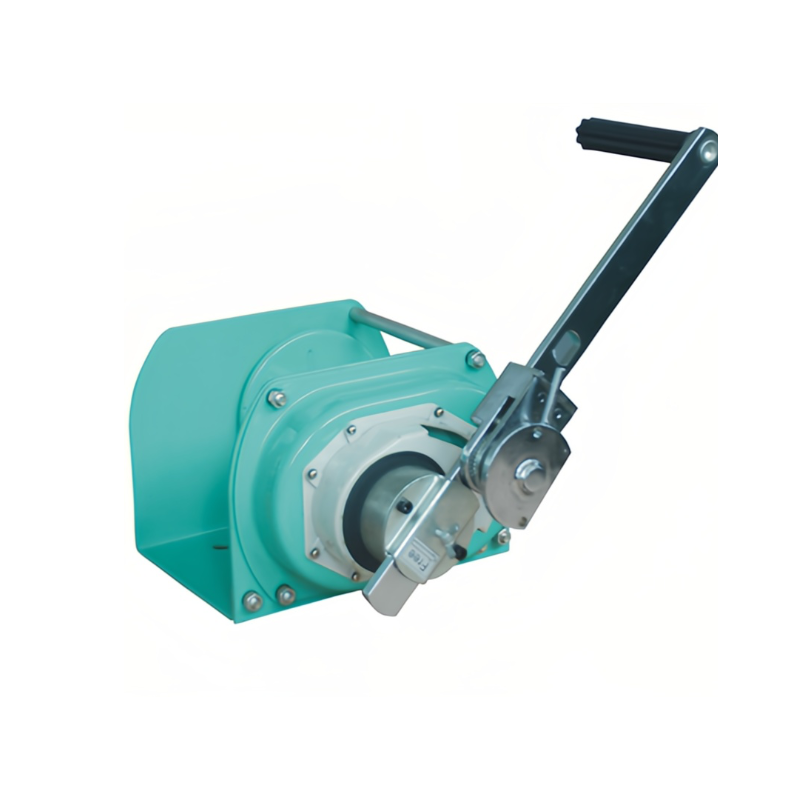
A wire rope winch under load stores enormous kinetic energy. If a wire rope snaps or a load shifts, the area immediately around the winch becomes a hazard zone. A pendant cord forces the operator to remain within this zone—often directly in the line of fire.
2. Restricted Visibility
A tethered operator cannot easily reposition to gain a better view of the load. They are forced to rely on hand signals from ground workers, introducing communication delays and misinterpretation risks—especially on noisy job sites.
3. Trip and Entanglement Hazards
Pendant cords drag across the ground, collecting mud, snagging on rebar, and creating trip hazards for other workers. In the event of a sudden load shift, the operator may struggle to untangle themselves from the cord while trying to react.
三,How Wireless Remote Control Changes the Safety Equation
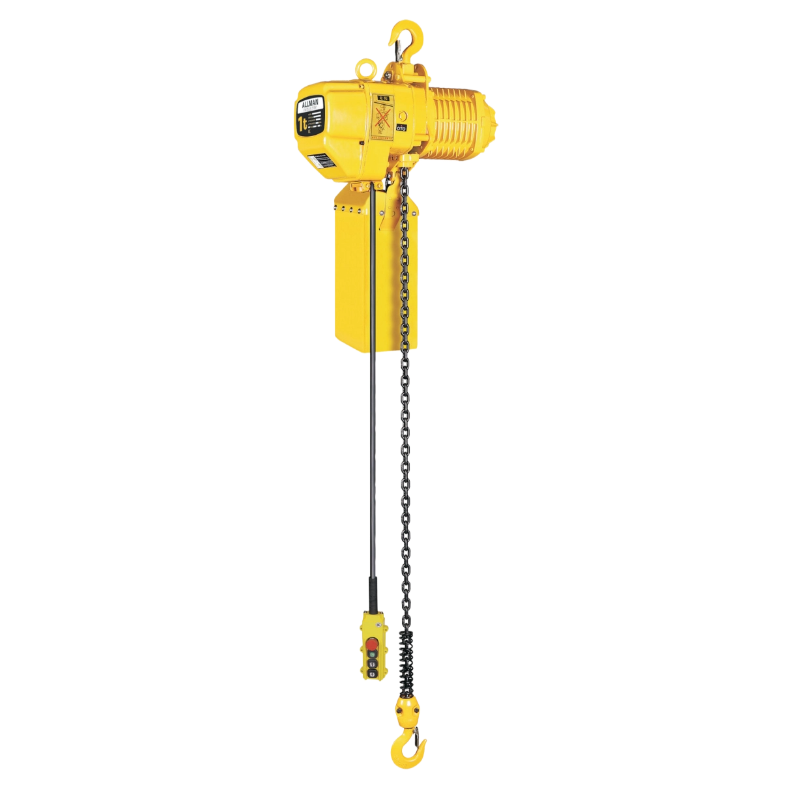
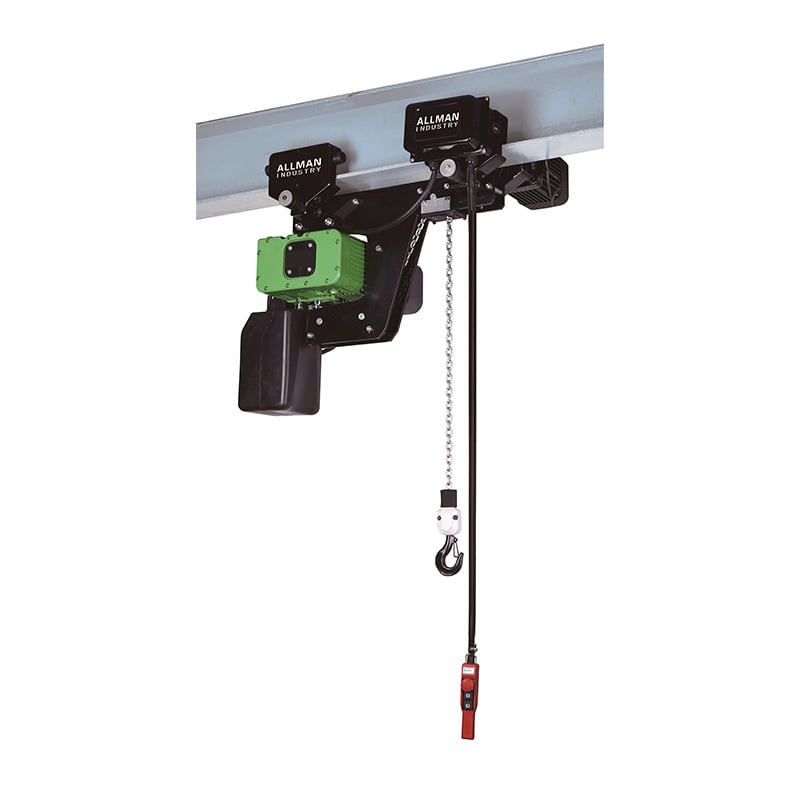
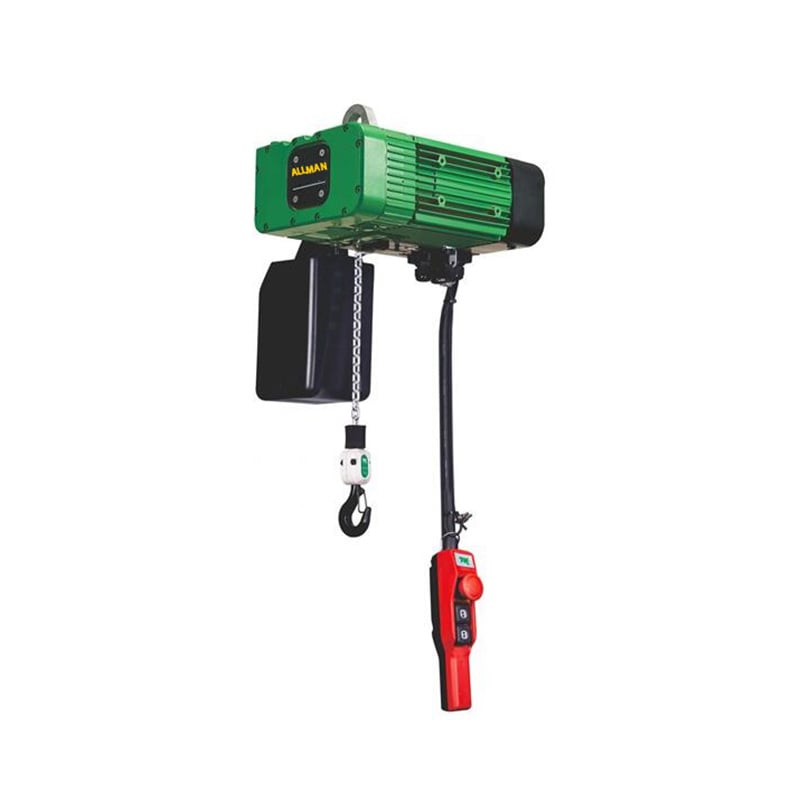
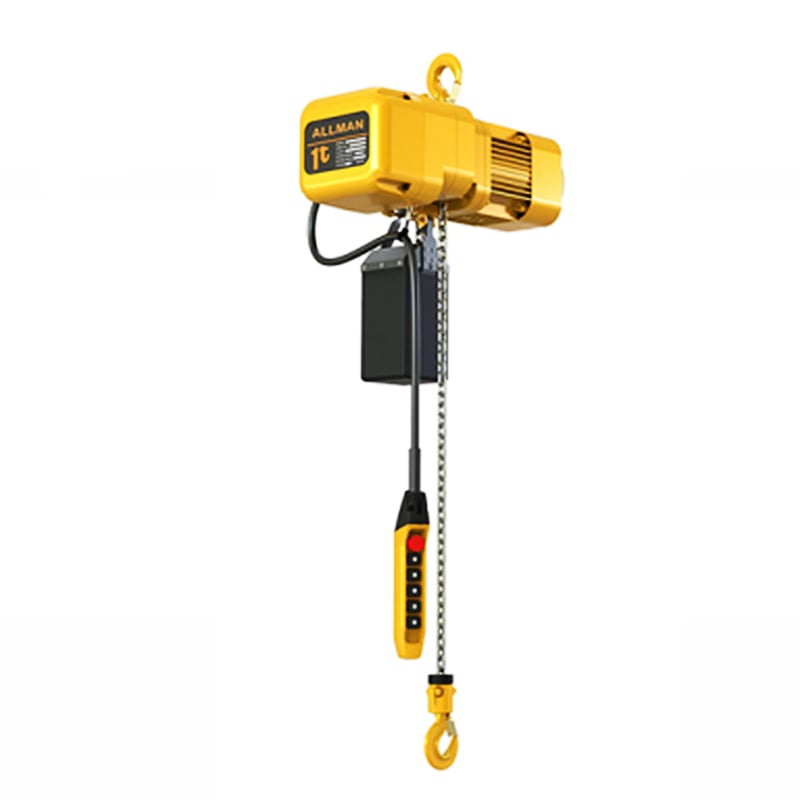
Modern wireless remote systems, like the one featured on ALLMAN's heavy-duty electric winches, fundamentally alter the operator's relationship with the machine.
1. Optimal Positioning
The operator can stand at the safest possible location—away from the load's swing path, behind barriers, or on elevated platforms with a clear line of sight. This flexibility dramatically reduces exposure to struck-by and caught-between hazards.
2. Enhanced Visibility
With the ability to move freely, the operator can observe the load from multiple angles, confirm clearance, and communicate directly with riggers without relying on third-party signals. This is especially critical in complex lifts involving confined spaces or obstacles.
3. Instant Emergency Stop
The handheld remote controller features a prominent, recessed Emergency Stop button that can be activated reflexively—without looking. Because the operator is not tethered, they can also step further away while cutting power, adding an extra layer of protection.
4. Reduced Physical Strain
Operators no longer need to brace against the pull of a pendant cord or stretch to reach controls. The ergonomic remote fits comfortably in hand, reducing fatigue during long shifts and improving overall concentration.
四,What to Look for in a Wireless Remote Control Winch
|
Feature |
Why It Matters |
|
Industrial Frequency Band |
Avoids interference from Wi-Fi, cell towers, and other radios on congested sites. |
|
Emergency Stop Function |
Must be a dedicated, easily accessible button—not buried in a menu. |
|
Range & Reliability |
Minimum 100m line-of-sight range; failsafe mode if signal is lost (auto-brake). |
|
Battery Life & Durability |
Rechargeable or long-life batteries; rubberized housing to withstand drops and moisture. |
五,FAQ
Q: Does the emergency stop button on the remote control really work in critical situations? How fast is the response time?
A: Yes. The emergency stop button is a hardware switch that directly cuts off the main power supply to the receiver; it bypasses any software logic processing, resulting in a response time in the millisecond range. The button features a red "mushroom-head" design that protrudes from the controller's surface, allowing the operator to strike it directly with a palm or fist in high-pressure situations without needing precise aim. Upon activation, power to both the motor and the brake is cut off, and the drum locks immediately.
Q: What kind of foundation does the wire rope winch require? Can it be placed directly on the ground?
A: It cannot be placed directly on the ground. It must be secured using anchor bolts to a concrete foundation of sufficient strength. Foundation dimensions and anchoring requirements depend on the maximum working pull and the presence of any lateral forces. We will provide an anchor bolt layout drawing and recommendations for the minimum foundation specifications. Counterweights or welding the chassis to the mounting surface may be used for temporary fixation, subject to confirmation by an engineer.
Q: What should be done if the motor overheats and emits smoke?
A: Immediately stop operation, disconnect the power supply, and allow the motor to cool down naturally. Possible causes: ① overload operation; ② frequent starting and stopping (high starting current prevents adequate heat dissipation); ③ blocked ventilation ducts; ④ low voltage or phase loss. Check the insulation resistance after the motor has cooled.
Q: Can people stand nearby while the winch is operating?
A: Unauthorized personnel are strictly prohibited from remaining within the winch's operating area. The operator must stand at a safe distance (recommended: ≥1.5 times the height of the suspended load) and ensure that no one is underneath. When using a wireless remote control, the operator should always remain to the side or rear of the load, avoiding positions directly beneath the load or in the potential path of a snap-back or whip-lash.
Q: How do I reset the emergency stop button after it has been pressed?
A: The emergency stop button is a self-locking mushroom-head type; after being pressed, it must be rotated clockwise or pulled out to reset. Before resetting, you must confirm that the hazard has been eliminated and that all personnel have moved away from the danger zone. Do not reset the button without first confirming that it is safe to do so.
 Hot News
2026-07-11
2026-07-02
2026-07-01
2026-07-03
2026-06-12
2026-01-23
Nantong Allman Industry Co.,Ltd. is a professional manufacturer specializing in the manufacturing and export of high-quality lifting&material handling equipment in China.
Room 1503, Building#2, No.#166, North Street, Nantong City, Jiangsu Province, China.
Copyright © Nantong Allman Industry Co.,Ltd. All Rights Reserved Privacy Policy Blog